
Your master in Water and Energy
A high-level, multi-national, research and industrial-oriented education in Water and Energy interactions

The programme will address the expressed EU needs for water, energy and the link between them, and it is in line with the timeline for renewable energy in EU.
Its main objective is the education of Master graduates who have not only the state-of-the-art training in the thematic area of the Water-Energy Nexus, but who are additionally specialised in Energy Transition, Technologies and Markets, Renewable Energy in Water Systems and Water Energy Mining through the development of advanced skills and awareness to societal and industrial needs.
Watergy is a two years master programme with a total of 121 ECTS

Train students in the innovation landscape
The general objective of the project is to develop a joint master programme that provides state-of-the-art training in Water and Energy, ensure relevance on the programme to industry needs, train students in the innovation landscape and contribute to technological progress and sustainable economic growth.

Why?
Synergies
Students
Students will have a wide choice of courses, practical training in national and international laboratories, field training and training in the use of state-of-the-art software.
At the same time, students will fully integrate in the international scientific community, which is a salient step for their future career.
Renewable energy
Different countries and cultures
A further advantage of the Watergy programme is the synergy of inter-disciplinary expertise from both theoretical and applied disciplines and experts from different countries and cultures.
Thus, it will provide students with the issues related to their introduction and exploitation of renewable energies and a holistic approach to solving and handling these problems.
The final objective is that the graduates from Watergy can face challenges of energy production and management and their integration with water systems in the context of global change.
Need
Energy
Energy is essential for our society. Without the massive production and distribution of energy, the quality of our lives would be drastically reduced and our lifestyle would be similar to preindustrial societies. However, it comes at a price. The massive use of fossil fuels has rapidly increased the concentration of carbon dioxide in the atmosphere, which contributes to increasing the greenhouse effect. All of this has led to a change in the world climate.
The energy sector is responsible for more than 75% of the EU’s greenhouse gas emissions. To achieve the European ambition of climate neutrality, it is necessary to advance in the decarbonisation of the energy sector by enhancing the use of clean energies
All this has led to an increase in the importance of the renewable energy sector and its labour needs. Renewable energy employment has been on an upward trajectory, growing up to 12 million jobs in the worldwide renewable energy sector in 2020.
The rising trend will continue in the following years. The International Renewable Energy Agency (IRENA) estimates that the renewable energy sector could account for 38 million jobs by 2030 and 43 million by 2050.
13% of these jobs will require a tertiary education at the bachelor, masters’ or doctoral levels (IRENA (2021), World Energy Transitions Outlook: 1.5°C Pathway, Fig. 2b). Thus, there is an increasing demand for renewable energies specialists.
Water
Water is a crucial resource for humanity. Not only is necessary for life, but our prosperity highly depends on it. Economic activities like manufacturing and farming are highly water-dependent, and for living, our cities and villages need to have access to clean water, sanitation and wastewater treatment.
Ensuring water in sufficient quantity and quality for all uses (drinking water supply, irrigation, energy production, ecosystem protection, recreation) is paramount for our societies and for a peaceful geopolitical climate.
Affordable and clean energy, clean water and sanitation, and climate action are three UN’s Sustainable Development Goals (SDG 7, 6 and 13). Achieving them must be an objective of our society.
The multi-use objectives that constrain water resources and energy production worldwide call for professionals able to analyze water and energy systems through a systemic lens. Therefore, there is a need for graduates that can face all these challenges.
Both Water and Energy are important topics, each of which has its own particularities. However, they are not isolated from each other.
Some important sources of renewable energy are water systems, and their optimum design, implementation and management requires knowledge and competences in both of them.
Watergy master programme is the response to the necessity of an university curricula that trains students in Water and Energy and their interactions in an comprehensive way and make them able to contribute to the accomplish of the Sustainable Development Goals.
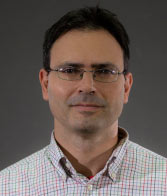
"We are specially committed with the education of our students. We want them to be able to face the challenges of providing clean water and green energy to Humanity while working in a multicultural environment."
Enrique Castro Rodríguez
Director of the Master Watergy

Funded by the European Union. Views and opinions expressed are however those of the author(s) only and do not necessarily reflect those of the European Union or the European Education and Culture Executive Agency (EACEA). Neither the European Union nor EACEA can be held responsible for them.

This EMDM aims at developing the EMJM entitled Water and Energy (Watergy) that will provide a high-level, multi-national, research and industrial-oriented education in Water and Energy interactions, which complies with the EGD strategy to provide future-proof jobs and skills training for the transition as a basis for cleaner energy and cutting-edge clean technological innovation.